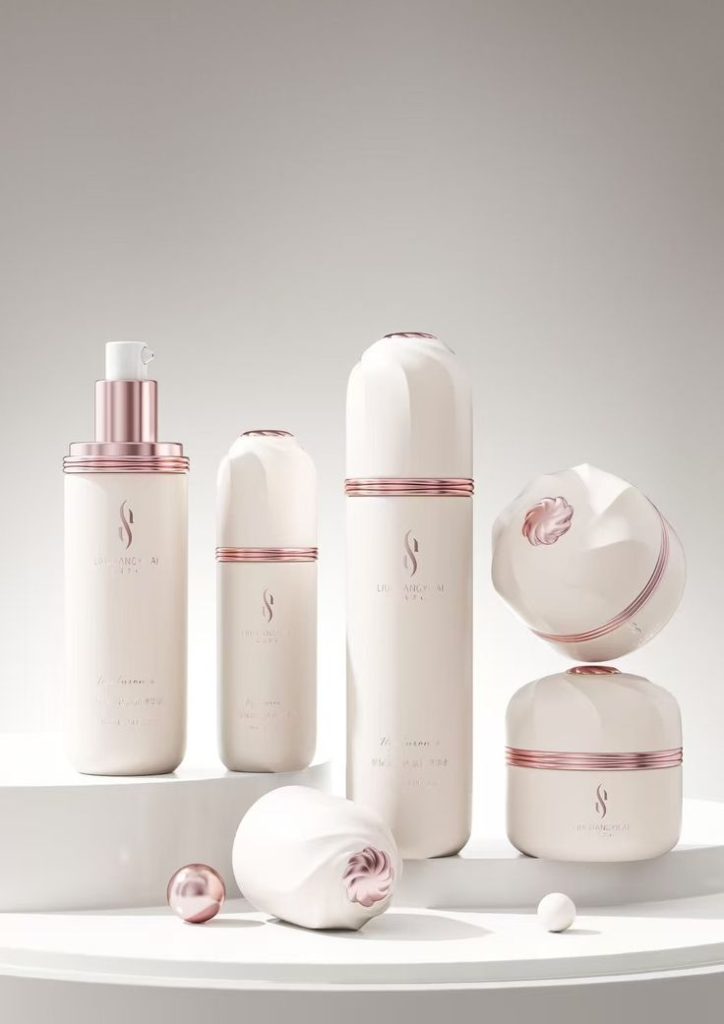
A cosmetic packaging manufacturer in China can supply bottles, jars, tubes, airless pumps, droppers and caps at factory prices. The hard part is not finding a factory. It is knowing whether you are talking to a real factory, a trading company, or a broker who has never seen the production line.
That single question changes your price, your minimum order, and who answers the phone when a batch comes out wrong.
This guide covers what factory direct really means, what you can source, realistic minimum order quantities, the step-by-step process, lead times, and the quality checks that matter before you pay the balance.
Factory direct, trading company or sourcing partner?
All three will call themselves a manufacturer. They are not the same, and each fits a different buyer.
| Type | What they own | Best for | Watch out for |
|---|---|---|---|
| Factory direct | Their own moulds and moulding machines, usually one product family | Large orders of a single item | They rarely supply a full set — you end up managing five suppliers |
| Trading company | Nothing. They buy from factories and resell | Mixed orders, small quantities | Margin is hidden inside the unit price, and quality control is often nominal |
| Sourcing and production partner | No moulds, but a vetted factory network plus on-site staff | Buyers who need a full set and cannot travel | Ask what they physically do at the factory, not what they promise |
The trap is the second row. A trading company quoting a single low unit price looks cheapest. But when a shipment fails inspection, they have no leverage over the factory and neither do you.
The practical test is simple. Ask for the moulding workshop, the machine tonnage used for your item, and a photo of your part on the line with a date. A real factory answers in minutes. A broker changes the subject.
What packaging can you source?
Cosmetic packaging is not one industry. It is several, and different clusters specialise in different parts.
| Category | Common materials | Typical use |
|---|---|---|
| Airless bottles | PP, PETG, ABS outer shell | Serums, sunscreen, active formulas that oxidise |
| Dropper bottles | PETG, glass, PC dropper | Serums, ampoules, facial oils |
| Lotion pump bottles | PP, HDPE, PET | Lotions, cleansers, hand gels |
| Cream jars | PP, PETG, acrylic, glass | Moisturisers, sleeping masks, balms |
| Squeeze tubes | PE mono-layer, ABL laminate | Cleansers, sunscreen, hand cream |
| Fine mist sprayers | PET, PP, aluminium collar | Toners, facial mists, hair products |
| Sticks and lip tubes | PP, ABS | Lip balm, deodorant, solid balms |
| Closures and caps | PP, ABS with vacuum metallising | All of the above |
A finished item is rarely made in one place. A pump bottle may combine a body moulded at one plant, a pump assembly from a second, and a metallised cap from a third. Someone has to hold those three schedules together, and that is where most delays come from.
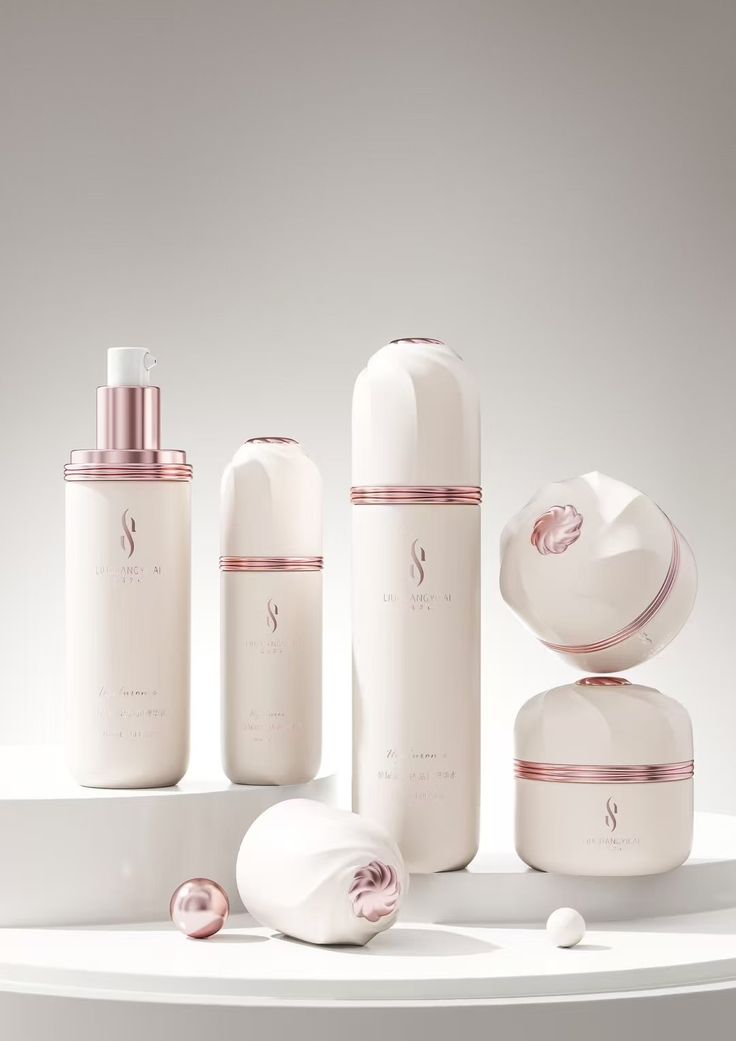
You can browse the full range of moulds available through our cosmetic packaging catalogue, including airless bottles in 15ml, 30ml and 50ml, PETG cream jars from 50g to 100g and all-plastic PETG dropper bottles.
What minimum order quantity should you expect?
MOQ is not one number. It moves with how much customisation you ask for, and understanding why saves a lot of negotiation.
| Level of customisation | Relative MOQ | Why |
|---|---|---|
| Stock mould, stock colour | Lowest | The factory only has to run the line, nothing new to prepare |
| Stock mould, silk-screen logo | Low, plus a one-off screen setup | Screen has to be made and test printed |
| Stock mould, custom colour | High | Masterbatch is mixed in batches with a minimum weight |
| Custom mould | Highest, plus tooling cost | The mould itself is a separate investment before any unit is made |
The order in this table is almost always true, even when the exact figures differ from one supplier to the next. If your volume is small but you want a distinctive look, the cheapest path is a stock mould with a custom decoration — not a custom mould.
One more thing about tooling. Always agree in writing who owns the mould after it is paid for, where it is stored, and what happens if you move to another factory. A mould you paid for but cannot move is not really yours.

How the process runs, step by step
- Brief. Product type, volume, material, colour reference, decoration method, target quantity and target date. Vague briefs produce vague quotes.
- Shortlist and quote. Two or three factories quote the same specification so the numbers are comparable.
- Samples. Stock samples first to confirm the shape and feel. Then a decorated sample with your artwork.
- Compatibility test. Fill the sample with your actual formula and leave it. This step is skipped constantly and it is the one that saves whole shipments.
- Sign and seal the approved sample. Both sides keep one sealed reference. Everything afterwards is judged against it.
- Mass production. Ask for a photo of the first-run parts before the full quantity is made.
- Inspection and shipment. Inspect before the balance is paid, not after arrival.
Step 4 deserves more attention than it usually gets. Some formulas attack certain plastics. Essential oils can craze PETG. High-alcohol toners can distort thin PP walls. A pack that looks perfect on day one can deform after six weeks with your product inside.
Run the test at room temperature and at elevated temperature, and check three things: the container shape, the seal, and whether the printing still resists a thumb rub.
Lead times you should plan for
| Stage | Who controls it | Delay risk |
|---|---|---|
| Quotation | Supplier | Low, unless the brief is incomplete |
| Stock samples | Supplier | Low |
| Decorated samples and approval | You | Highest — samples often sit waiting for a decision |
| Custom colour matching | Supplier and masterbatch plant | Medium, needs a physical plaque approval |
| Mould making | Tooling shop | High if the design changes mid-way |
| Mass production | Factory | Medium, rises sharply before Chinese New Year |
| Shipping and customs | Freight forwarder | Medium, depends on route and paperwork |
Two rows drive most missed launch dates. The first is sample approval, which is on the buyer’s side. The second is the period before Chinese New Year, when factory capacity is booked out and staff leave for weeks. Plan any launch that lands in the first quarter with that gap already subtracted.
Colour approval has one hard rule: approve the colour on the actual plastic, never on a printed sheet. The same reference code looks different on PP, PETG and glass.
Quality control before you pay the balance
Inspection is the last point where you still hold leverage. Once the balance is paid and the container has sailed, your options shrink to goodwill.
Check these seven things on a sample drawn from the finished lot:
- Dimensions. Neck finish, thread size, height and diameter against the approved sample.
- Colour. Compare against the sealed plaque under consistent lighting, not a phone screen.
- Print. Position, size, and adhesion. Rub the print firmly and see whether it lifts.
- Function. Actuate pumps and droppers repeatedly. Count the failures in a fixed sample size.
- Leak test. Fill, seal, invert, and leave. Then repeat after transport vibration if you can.
- Cosmetic defects. Flow lines, sink marks, weld lines, scratches. Agree in advance what counts as a reject.
- Packing. Carton strength, count per carton, and labelling that matches your paperwork.
The most useful sentence in any supply agreement is the one that defines what happens when a lot fails: replace, rework, discount, or reject. Write it before you need it.
Common mistakes when sourcing from China
- Comparing unit price only. Tooling, decoration setup, cartons and freight can outweigh the difference in unit price entirely.
- Approving colour on paper. Printed references never match moulded plastic. Ask for a plastic plaque.
- Skipping the compatibility test. The formula and the pack have to live together for months, not for one photo.
- No sealed reference sample. Without one, every quality dispute becomes an argument about memory.
- Ordering the exact quantity needed. Always allow for a rejection rate and for damage in transit.
- Ignoring the Chinese New Year window. Capacity disappears for weeks and everyone discovers it at the same time.
- Paying the balance before inspection. This removes your only real leverage.
Mistake five is the quietest one. Ordering exactly what you need means a single failed carton delays your whole fill run. A modest buffer costs far less than a stalled production schedule.
Checklist before your first order
- Have you confirmed whether the supplier owns the moulds for your item?
- Is the quotation broken down into tooling, unit price, decoration and packing?
- Have you tested your actual formula in the sample, at two temperatures?
- Is there a signed and sealed reference sample held by both sides?
- Is the colour approved on moulded plastic, not on paper?
- Is mould ownership, storage and transfer written into the agreement?
- Does the contract define what happens when a lot fails inspection?
- Is the balance payable after inspection rather than before?
- Have you allowed for a rejection buffer in the quantity?
- Does the schedule avoid the pre-holiday capacity crunch?
Answer all ten and most sourcing problems never appear. Skip three or four and you will meet them in order.
Detailed guidance on individual topics is published on this site in Vietnamese — including how to evaluate a Chinese packaging supplier, minimum order quantities by product type and the difference between OEM and ODM arrangements.
About VEENI
VEENI — SẢN XUẤT GIA CÔNG CHAI LỌ MỸ PHẨM TẠI TRUNG QUỐC
Cosmetic packaging manufacturing and sourcing in China.
What we do: design consulting, supplier sourcing, sample development, production management at the factory, and import handling. Our import experience is primarily into Vietnam — if you need delivery to another market, tell us the destination and we will confirm what we can arrange before you commit to anything.
- Hotline: 0933 439 668
- Email: Veenivietnam@gmail.com
- Address: LK 15-VT29, Khu nhà ở Xa La, P. Phúc La, Q. Hà Đông, Hà Nội, Vietnam
Frequently asked questions
How do I know if a cosmetic packaging supplier in China is a real factory?
Ask which moulds they own for your specific item, what machine tonnage runs it, and request a dated photo of your part on the production line. A factory answers within minutes because the information is in the workshop. A trading company changes the subject or sends generic catalogue images.
What is the minimum order quantity for cosmetic packaging from China?
It depends on how much customisation you need. Stock mould with stock colour has the lowest minimum. Adding a silk-screen logo raises it slightly plus a one-off screen setup. A custom colour raises it significantly because masterbatch is mixed in minimum batch weights. A custom mould is highest and adds tooling cost on top.
Do I need to test my formula in the packaging before ordering?
Yes, and this is the step buyers skip most often. Some formulas attack certain plastics — essential oils can craze PETG and high-alcohol toners can distort thin PP walls. Fill a sample with your actual product, leave it at room and elevated temperature, then check shape, seal and print adhesion.
Who owns the mould if I pay for the tooling?
Only what the contract says. Always write down who owns the mould after payment, where it is stored, and whether it can be transferred to another factory. A mould you paid for but cannot move is effectively the factory’s asset, not yours.
When should I inspect the goods?
Before paying the balance and before shipment. Inspection is the last point where you still have leverage. Check dimensions, colour against a sealed plaque, print adhesion, pump function in quantity, leak resistance, cosmetic defects and carton packing.
Related articles
- Sourcing cosmetic packaging from China (Vietnamese)
- OEM and ODM cosmetic manufacturing explained (Vietnamese)
- Importing cosmetic packaging: procedures and paperwork (Vietnamese)
- Cosmetic packaging types and how to choose (Vietnamese)
- Sustainable cosmetic packaging options (Vietnamese)